Composable tunnel chains
Build network paths from small nodes: listeners, protocol transforms, encryption, multiplexing, packet bridges, and connectors.
Compose listeners, transport layers, packet transforms, and protocol adapters into reliable network paths.
Instead of one fixed proxy shape, WaterWall lets each route describe the exact chain it needs.
Build network paths from small nodes: listeners, protocol transforms, encryption, multiplexing, packet bridges, and connectors.
WaterWall is designed around asynchronous I/O, worker threads, buffer pools, and low-copy packet movement.
Use ordinary TCP/UDP flows, raw packet pipelines, TUN devices, WireGuard edges, or bridge between models when a route needs it.
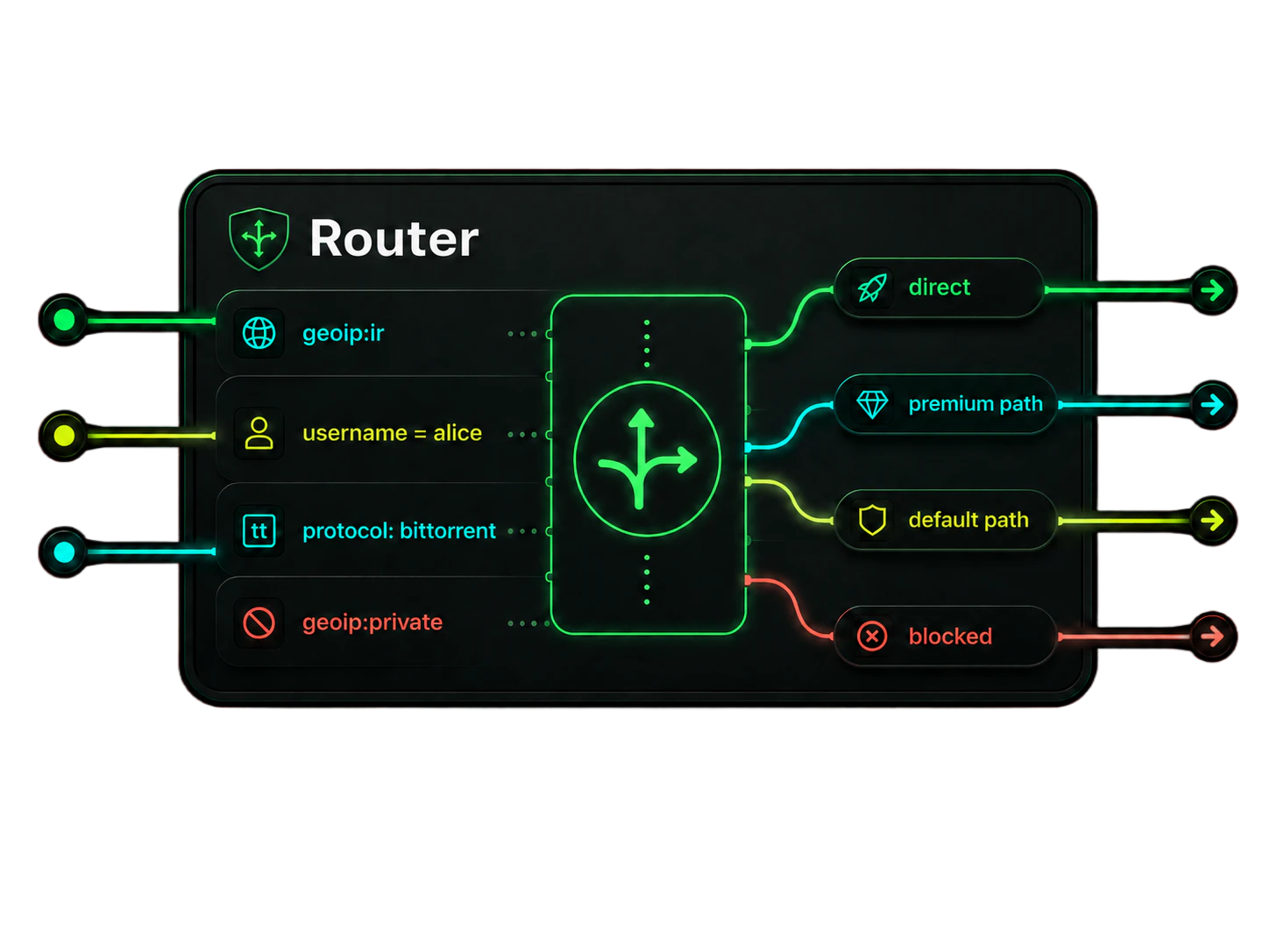
A route can stay linear, or hand traffic to Router so rules choose different branches by domain, protocol, identity, port, or source.